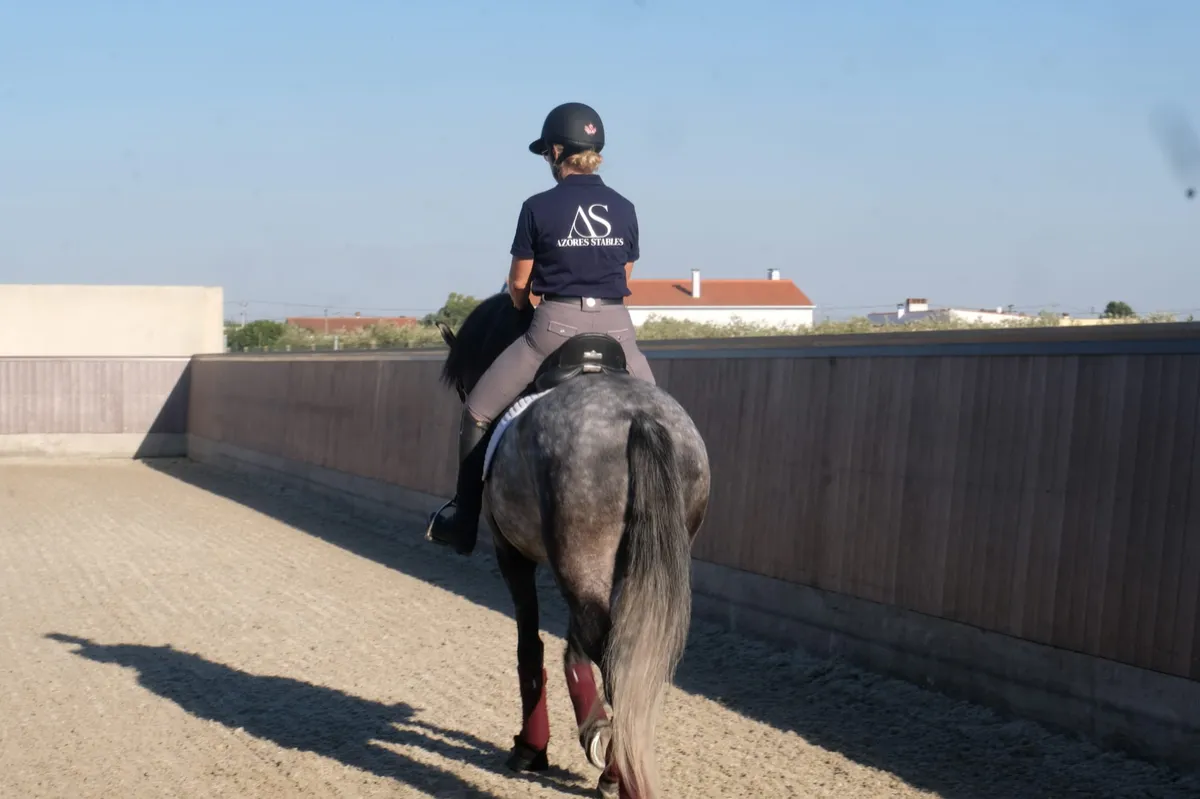
What International Competition Brings Back to the Training Arena
Lessons from the 2026 WAWE World Championship, and why the most valuable ones don't always come from the saddle.
This month, the international Working Equitation community gathered at the Royal Andalusian School of Equestrian Art in Jerez for the WAWE World Championship, held September 8–13. For Canada, it was a milestone: a national team on the world stage in the birthplace of the discipline.
For Pam, the week unfolded differently than planned. An injury her horse sustained during travel kept her from competing in Spain. After months of preparation, that is not an easy outcome to accept. But anyone who has spent a career around horses knows that the plan is rarely the whole story. Sometimes stepping back from the arena shows you more than riding in it would have.
Watching a World Championship from the rail, without the focus that your own test demands, gives you a different vantage point. You see the patterns. You see what separates the combinations that hold together under pressure from the ones that don't. And you come home with a clearer picture of what riders need, not just at the international level, but in every lesson on an ordinary Tuesday.
This is what that perspective brings back to the training arena.
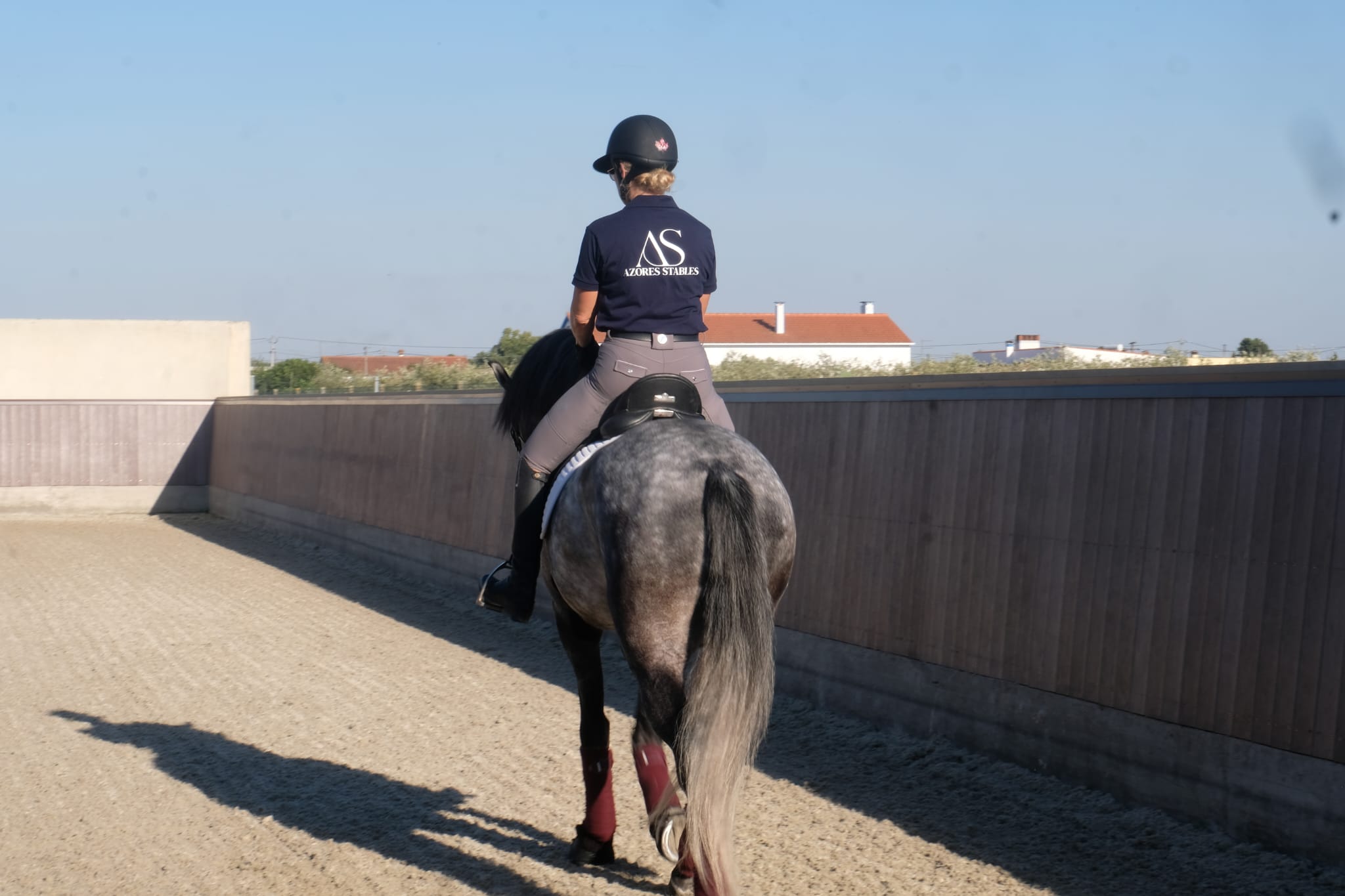
Fundamentals Matter More as Difficulty Increases
There is a common assumption that advanced riding means leaving the basics behind. International competition proves the opposite.
At the highest level, the movements are more demanding, the obstacles more technical, and the margin for error smaller. What holds it all together is the same foundation taught in the first months of classical training: rhythm, straightness, contact, balance, and a horse that is genuinely forward and listening to the rider's aids.
When a pirouette loses quality or a change of lead comes late, the cause is rarely the movement itself. It is almost always a gap in the foundation underneath it. The best combinations in the world do not have secret techniques. They simply have fundamentals so established that they hold under pressure.
This is why classical foundation sits at the center of rider development at Azores. It is not a stage riders pass through. It is the structure everything else is built on.
The Work Happens Between the Movements
Spectators watch the obstacle. Experienced riders watch the approach.
In Working Equitation, the quality of a gate, a bridge, or a slalom is largely decided in the strides before it. The preparation between movements and obstacles, the half-halts, the rebalancing, the setup of bend and line, determines whether the horse arrives ready or arrives rushed.
At international level, the strongest rides look almost quiet. Transitions are prepared early. Lines are planned. The horse is never surprised by what comes next. That smoothness is not a lack of effort. It is effort placed where it counts.
For riders at home, this reframes how training time is used. Rather than drilling an obstacle repeatedly, the more productive question is: what does my horse need in the three strides before it? Train the preparation, and the obstacle often takes care of itself.
Composure Is a Performance Skill
A championship environment tests more than technical ability. New surroundings, crowds, travel, and the weight of representing your country all place pressure on horse and rider alike.
Composure is what allows training to show up when it matters. A rider who stays calm and clear in their body gives the horse the confidence to stay with them. A rider who tightens, rushes, or overthinks transmits that tension immediately.
This is not simply temperament. Composure can be developed. It comes from preparation that builds confidence, from routines that settle the mind, from physical fitness that keeps the body steady when fatigue sets in, and from riding in a way that makes clarity a habit rather than an effort.
It is also why rider wellness is part of how Azores approaches development. Performance starts within, and the rider's mental and physical state is part of the partnership.
Watching Different Systems Makes You a Better Rider
One of the great values of an international championship is seeing how different nations approach the same discipline. Riding traditions shape how horses are prepared, how obstacles are ridden, and what qualities each system prioritizes.
Some riders emphasize expression and brilliance. Others prioritize precision and economy. Some ride the speed phase with bold efficiency, others with meticulous control. None of these approaches is the only answer, and seeing them side by side sharpens a rider's eye.
The lesson for riders at every level is to watch with intention. Rather than simply admiring a good ride, ask why it worked. Where did the rider prepare? What did the horse's balance look like before the difficult moment? What choices did they make that another rider didn't? Developing that eye is one of the fastest ways to improve your own riding, whether you are watching a world championship or a fellow rider in your own clinic group.
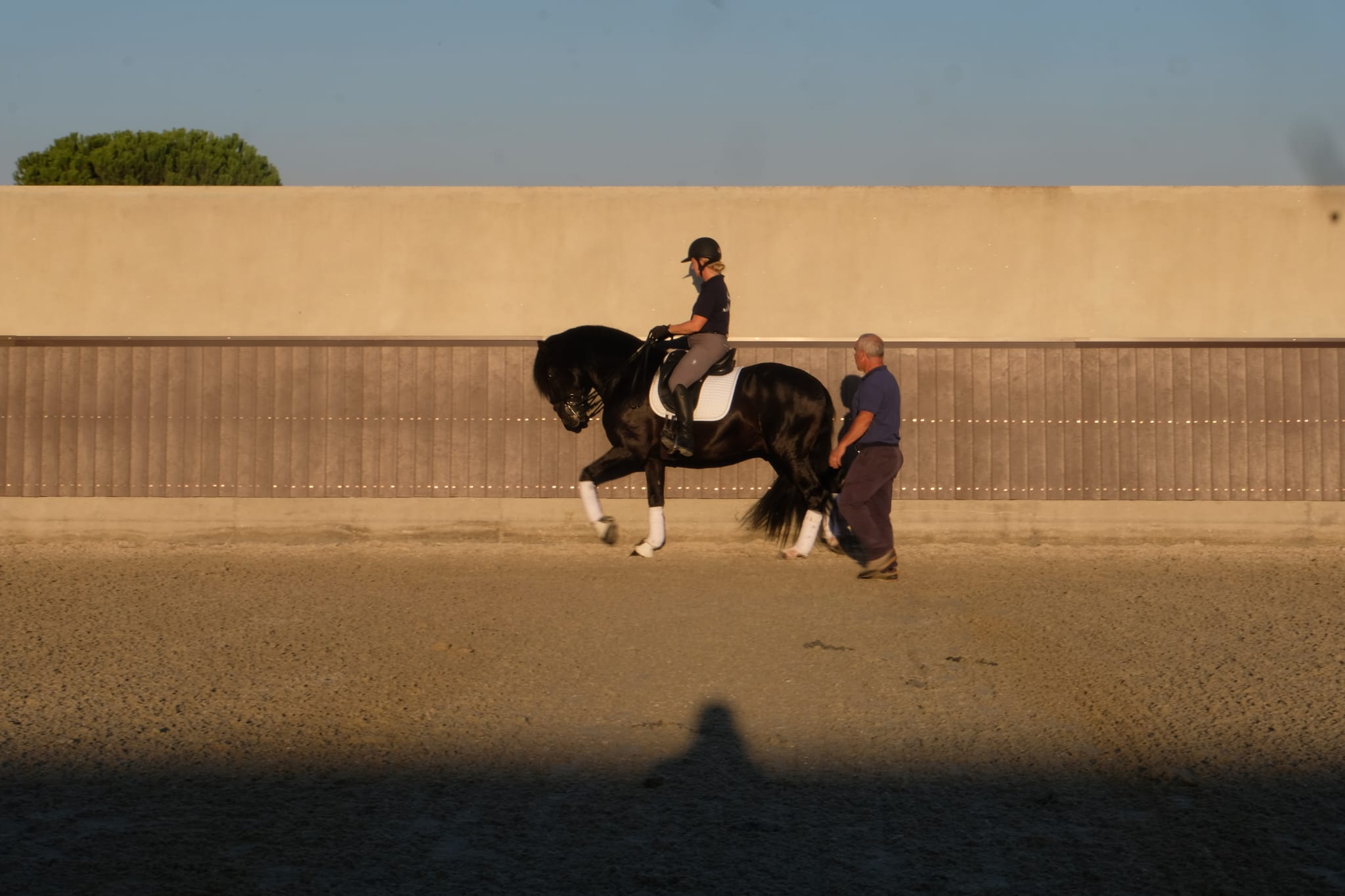
International Exposure Strengthens Coaching at Home
The real value of a World Championship is not the event itself. It is what comes home.
Exposure to the international standard refines how a coach sees, what they prioritize, and how they explain it. It confirms which fundamentals truly carry through to the top of the sport, and it brings fresh perspective on how to prepare horses and riders for competitive environments.
Pam returns from Jerez without the ride she had planned, but with a sharpened sense of what international performance really requires. Sometimes things not going as planned leaves you wiser than had they gone perfectly. That perspective translates directly into the arena at Azores: into clearer feedback, more intentional lesson structure, and training that prepares riders not just to perform movements, but to perform them with confidence when it counts.
International perspective is only valuable if it shapes everyday riding. That is where it belongs.
Classical Foundation. Competitive Performance.
Whether your goals include Working Equitation competition, classical dressage, or simply riding with more clarity and confidence, the principles are the same ones that hold up on the world stage.
Learn more about fall coaching, Working Equitation training, clinics, and rider-development opportunities at Azores Stables.
Train with purpose. Ride with clarity.
